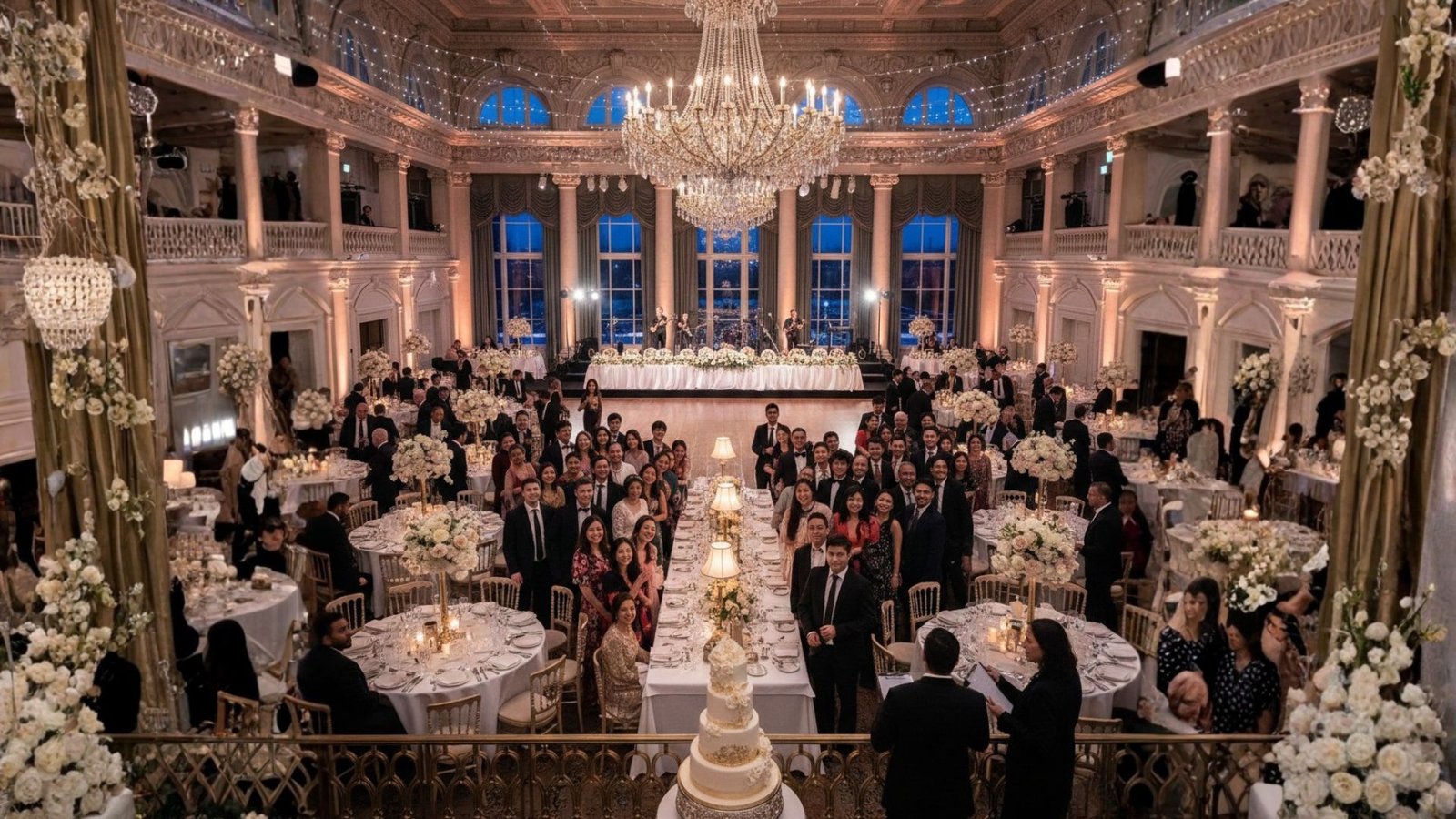
In London’s vibrant social landscape, a wedding is often not just a family celebration; it is a grand festival with hundreds of guests. However, an event with 300, 400, or even 500+ guests stops being a simple “party” and becomes a matter of professional event management.
The joy of a massive celebration is unmatched, but so is the logistical challenge. The stress of an operation this size should never overshadow your happiness. As experts who have hosted countless large-scale weddings at Palace Banqueting, we are sharing 5 professional tips to manage the process, moving you from stress to success.
1.The Logistics of the Guest List: RSVPs and Seating Plans
While deciding who to invite is a personal choice, managing where they sit is a logistical puzzle. On a 500-person list, a casual approach to RSVPs can be disastrous.
- The 10% Reality: A mere 10% miscalculation on a large list equals 50 unexpected people. This creates chaos for catering numbers and table plans.
- Strict Deadlines: Use digital RSVP tools and set a firm final date.
- Strategic Seating: For large crowds, a clear seating chart is mandatory to prevent a bottleneck at the entrance. Your goal is to get guests seated as quickly and smoothly as possible.
2.It’s Not Just Capacity, It’s “Flow Capacity”
When a venue claims a “500-person capacity,” you must ask: does it host 500 people comfortably?. For large weddings, the most critical factor is Flow Capacity.
You must visualize the movement of the crowd:
- Arrivals: Will there be a bottleneck when 400 people arrive simultaneously? Is there a spacious entrance hall?.
- Cloakrooms: Is the cloakroom large enough to handle hundreds of coats efficiently in winter?.
- Room to Move: Once tables and stages are set, is there still room for guests to walk and for servers to navigate safely?
3.Implement a “Zero-Queue” Policy
Nothing kills the party vibe faster than guests spending half their night waiting in line. Large-scale venues like Palace Banqueting are architecturally designed to solve these problems, but you must also plan for them:
- Bar Access: Ensure there are multiple bar areas to disperse the crowd.
- Restroom Ratios: Crucially, are there enough restrooms to handle the peak times (usually after dinner)?.
- Entrance Logic: Avoid having a single receiving line if you have 500 guests; it will take hours. Consider visiting tables during dinner instead.
4.You Need a Conductor: The Day-Of Coordinator
On your wedding day, your role is to be the bride or groom, not the event manager holding a clipboard. With hundreds of guests and dozens of vendors, you need a professional “conductor”.
This role is often filled by the in-house Venue Manager or Banquet Captain. This person knows the venue’s infrastructure inside-out and can resolve logistical hiccups—like a power trip or a delayed vendor—before you even know they exist.
5.Managing Energy: Create ‘Breakout Zones’
Large weddings are often long, loud, and high-energy. However, not all 500 guests will want to be on the dance floor for five straight hours.
To manage the crowd’s energy effectively, create Breakout Zones.
- The Lounge: Create quieter areas away from the main speakers where older guests can sit and talk.
- Traffic Control: By spreading out the attractions (e.g., photo booth in the hall, bar in the lounge, dancing in the ballroom), you reduce crowding in the main space and improve the guest experience.
Grand-Scale Expertise
A large wedding, when combined with the right infrastructure, is the most magnificent celebration imaginable. The secret isn’t just the decor; it’s having a team and a venue designed to handle the logistics of that scale. At Palace Banqueting, our “no-queue” infrastructure and spacious ballrooms ensure your only job is to enjoy the moment.