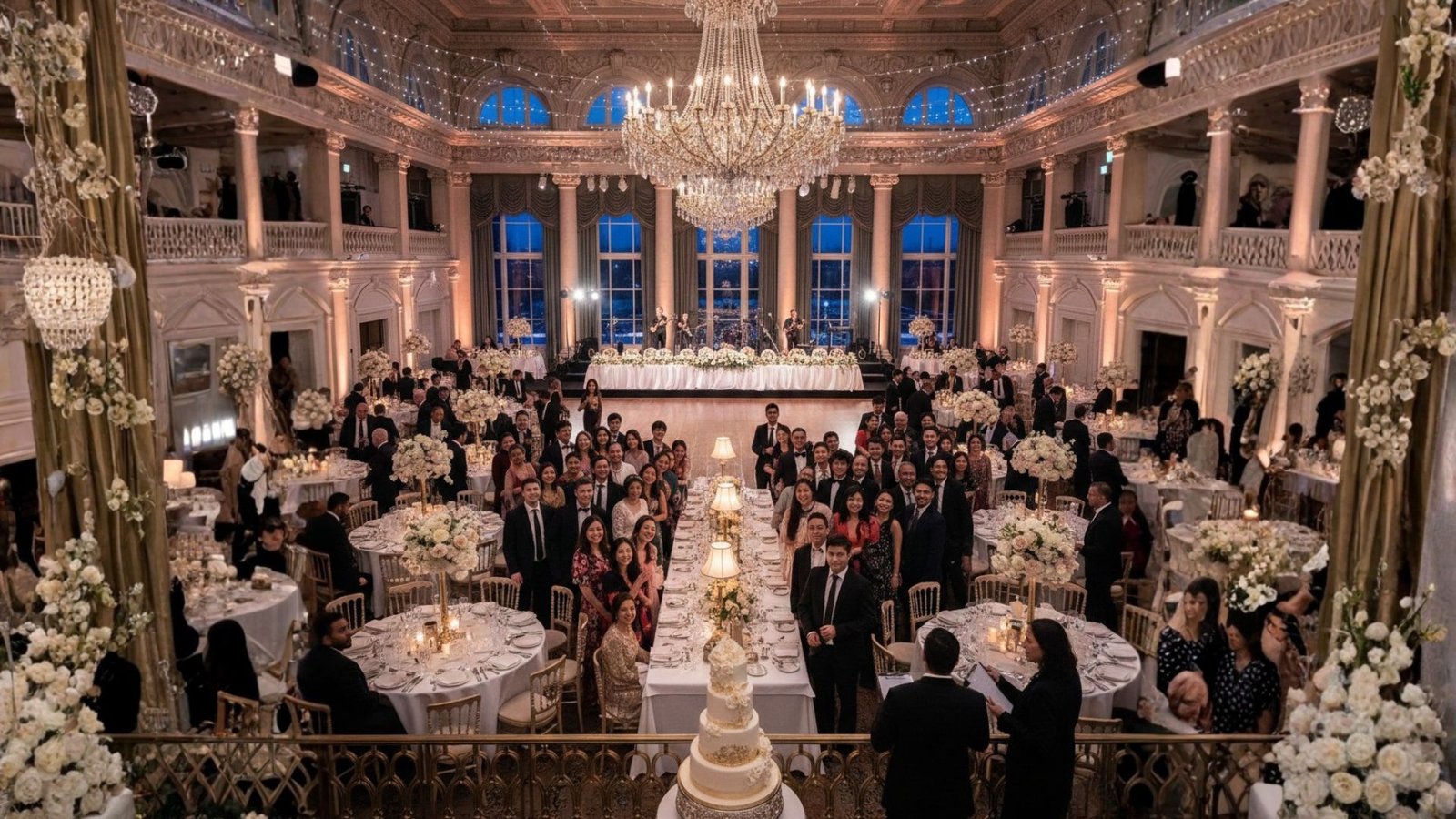

In London’s vibrant and multicultural social landscape, a wedding is often not just a family celebration; it’s a grand festival with hundreds of guests. An event with 300, 400, or even 500+ guests stops being a “party” and becomes a matter of professional “event management.”
The stress of an operation this size should never overshadow your joy. As experts who have hosted countless large-scale weddings, the team at Palace Banqueting is sharing 5 professional tips to help you manage the process, from stress to success.
1. Your Guest List: Treat it Like a Blueprint, Not a Wish List
The number one mistake in planning a large wedding is being “flexible” with the guest list.
- Create A and B Lists: Your “A List” is for the absolute must-haves. Your “B List” is for those you can invite if space (and budget) allows.
- Be Strict with RSVPs: On a 500-person list, a 10% miscalculation is 50 people. That is a massive difference for your catering, table plan, and budget. Use digital RSVP tools and set a firm final date. Your caterer and venue will need an exact number.
2. The Critical Decision: It’s ‘Flow Capacity,’ Not Just Capacity
When a venue says it has a “500-person capacity,” that doesn’t always mean it can host 500 people comfortably. For large weddings, the most important factor is “flow capacity.”
- Arrivals & Cloakroom: Will there be chaos when 400 people arrive at once? Is there a spacious entrance hall and an efficient cloakroom?
- Zero-Queue Policy: Are there enough bar areas and, crucially, enough restrooms? You don’t want guests spending half their night in a queue.
- Space to Move: After the tables, dance floor, and stages are set, is there still room for people to walk around and for servers to work efficiently?
Venues like Palace Banqueting, which were designed for large-scale events, have solved these flow problems architecturally.
3. Smart Logistics: Your Catering & Your Timeline
Feeding 500 people at the same time is an art form.
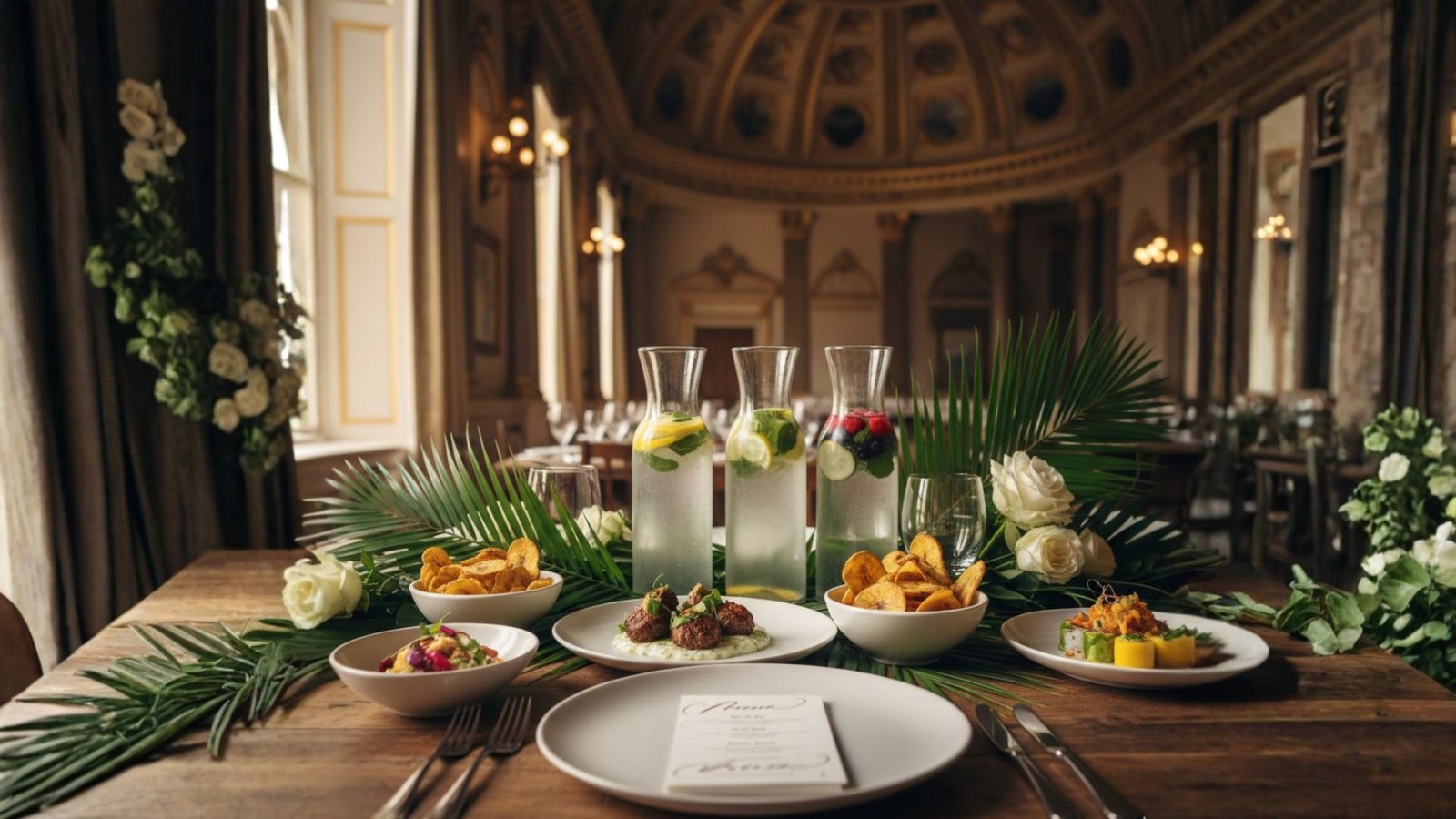
- Service Strategy: A fully plated, sit-down meal can be a logistical nightmare for a large crowd (the first table may finish 45 minutes before the last). Rich buffets or elegant “live-cooking stations” are often better, as they break up the flow and prevent long lines.
- The Master Timeline: With a big wedding, timing is everything. The ceremony, the meal service, the first dance, the cake… every single element must have a clear start and end time. This schedule must be shared with all your vendors (band, photographer, caterer).
4. You Need a Conductor: The Day-Of Coordinator
On your wedding day, you are the bride and groom, not the event manager holding a clipboard. With so many moving parts (guests, catering, music, vendors), you need a professional “conductor” to orchestrate the day.
This can be a hired wedding planner, or, even better, the experienced in-house Venue Manager or Banquet Captain provided by a professional venue like Palace Banqueting. This person knows the space inside-out and will solve problems before you even know they exist.
5. Divide the Experience: Create ‘Breakout Zones’ for Guests
Large weddings are often long and can be loud. Not all of your guests will want to be on the dance floor for five straight hours.
A successful large wedding provides different experiences. In addition to the high-energy dance floor in the main hall, create quieter “lounge” areas where people can sit, talk, and mingle. This reduces crowding in the main space and provides a wonderful comfort zone for older guests or those who just want a moment to catch their breath.
Grand-Scale Weddings Are Our Speciality
A large wedding, when combined with the right planning and (most importantly) the right venue, can be the most memorable, energetic, and magnificent celebration. The secret is having the infrastructure and the team that can handle the logistics of that scale.
At Palace Banqueting, we were designed to host London’s grandest and largest celebrations. Our spacious ballrooms, our “no-queue” infrastructure, and our experienced team ensure that your only job is to say “I do” and enjoy the moment.